
Views: 0 Author: Site Editor Publish Time: 2026-06-02 Origin: Site


Standard stretch films frequently experience severe thermal degradation in harsh industrial environments. They suffer immediate yield loss and catastrophic load failure when exposed to hot-fill processes, post-kiln cooling, or extreme climate transit. Using conventional wrap in these high-heat scenarios inevitably leads to widespread pallet rejection. Consequently, product damage rises, and increased machine downtime severely drains operational resources.
Durable High-Temperature Stretch Film rolls are engineered specifically to maintain load integrity under intense thermal stress. These specialized polymers resist melting, sagging, and snapping when standard plastics fail. This guide details the primary operational use cases you must consider. We thoroughly evaluate critical performance criteria and outline crucial implementation realities. You will learn how to verify film specifications, balance sustainability mandates, and support highly effective procurement decisions across rigorous supply chains.
High-temperature stretch films maintain structural integrity and load containment during hot-fill processes, post-kiln wrapping, and high-friction machine cycles.
Evaluating thermal wrap requires looking beyond gauge; yield thresholds, extrusion methods (cast vs. blown), and puncture resistance are critical performance indicators.
Upgrading to high-temperature film reduces long-term consumable spend by preventing snap-breaks and minimizing load-shifting damage.
Modern high-temp films can align with corporate ESG goals through recyclable, eco-friendly transparent stretch wrap options that do not sacrifice load retention.
Pallet wrapping represents a vital defense line against transit damage. However, standard linear low-density polyethylene (LLDPE) struggles in demanding environments. You must understand how thermal degradation sabotages basic film performance.
At ambient temperatures exceeding 120°F (49°C), standard polyethylene films soften drastically. The molecular bonds begin to relax under continuous heat. They lose critical secondary stretch memory. Secondary stretch memory represents the film's ability to contract back against the load after stretching. Standard wrap loses this vital load-holding force almost immediately. The film simply stretches out and stays loose. It behaves like an overused rubber band. Pallets wrapped tightly on the factory floor become dangerously loose within hours.
Common Mistake: Procurement teams often assume thicker gauge prevents thermal stretching. Heat affects polymer bonds regardless of thickness. Adding more layers of standard film only wastes material.
Softened film creates catastrophic downstream effects. It allows heavy loads to shift during transit. Trucks navigate tight turns, causing unstable pallets to lean. Goods arrive crushed or heavily damaged. Safety hazards multiply rapidly on the warehouse floor as loose boxes fall from overhead racks. Furthermore, rigorous receiving hubs will flatly reject unstable shipments. They send them back to the manufacturer. This triggers highly expensive reverse logistics.
Rejected Shipments: Retailers fine suppliers for leaning or dangerous loads.
Product Loss: Crushed inventory destroys profit margins and frustrates clients.
Labor Waste: Warehouse teams spend countless hours restacking unstable pallets.
Temperature threats do not solely come from hot products or warm climates. High-speed wrapping operations generate intense localized heat. Turntables and orbital rings spin at incredibly high revolutions per minute. Rollers generate friction as the film pulls tight. Without specialized film, this friction instantly warms the plastic. Equipment then experiences frequent snap-breaks. Mid-cycle tearing causes constant line stoppages. Labor costs rise significantly as operators repeatedly re-thread machines.
Different industries face unique thermal challenges. Standardizing your approach requires understanding specific application demands. Below, we explore the primary industrial sectors relying on specialized thermal wraps.
The food and beverage industry frequently relies on hot-fill sterilization. Manufacturers pump hot juices, sauces, or syrups directly into containers. Workers palletize these goods immediately.
Application: Wrapping pallets of canned goods or heavy glass jars directly after the hot-fill process. Facilities wrap loads while products radiate intense heat.
Requirement: The film must firmly resist melting. It cannot stretch out of shape while the packaged product cools down over 24 hours. It ensures the pallet remains perfectly unitized as the load settles. As corrugated boxes absorb ambient humidity and minor condensation, they soften slightly. The thermal film must squeeze tighter to compensate for this settling, preventing load failure.
Heavy construction materials pose severe challenges. Manufacturers cure bricks, tiles, and shingles in massive industrial kilns.
Application: Securing asphalt shingles, roofing materials, ceramics, or freshly extruded plastics. Workers package these materials while they still radiate substantial residual manufacturing heat.
Requirement: This application demands exceptionally high puncture resistance. It also requires supreme thermal stability. Ceramics and building materials feature sharp, abrasive edges. Standard hot wrap might hold the load but fail against sharp corners. A specialized heat-resistant wrap handles these heavy, jagged loads without warping or puncturing against the hot materials.
Modern mega-warehouses push machinery to the absolute limit. Speed equals profitability in high-volume distribution.
Application: Utilizing specialized, high-speed Stretch Film for Machine wrappers in massive distribution centers. Automated guided vehicles feed pallets into high-speed orbital systems.
Requirement: Specialized film mitigates the friction-induced heat generated by high-RPM turntable operations. It prevents mid-cycle film tearing entirely. You maximize machine uptime. You eliminate the cascading delays caused when a fast-paced automated line grinds to a halt due to a simple film snap.
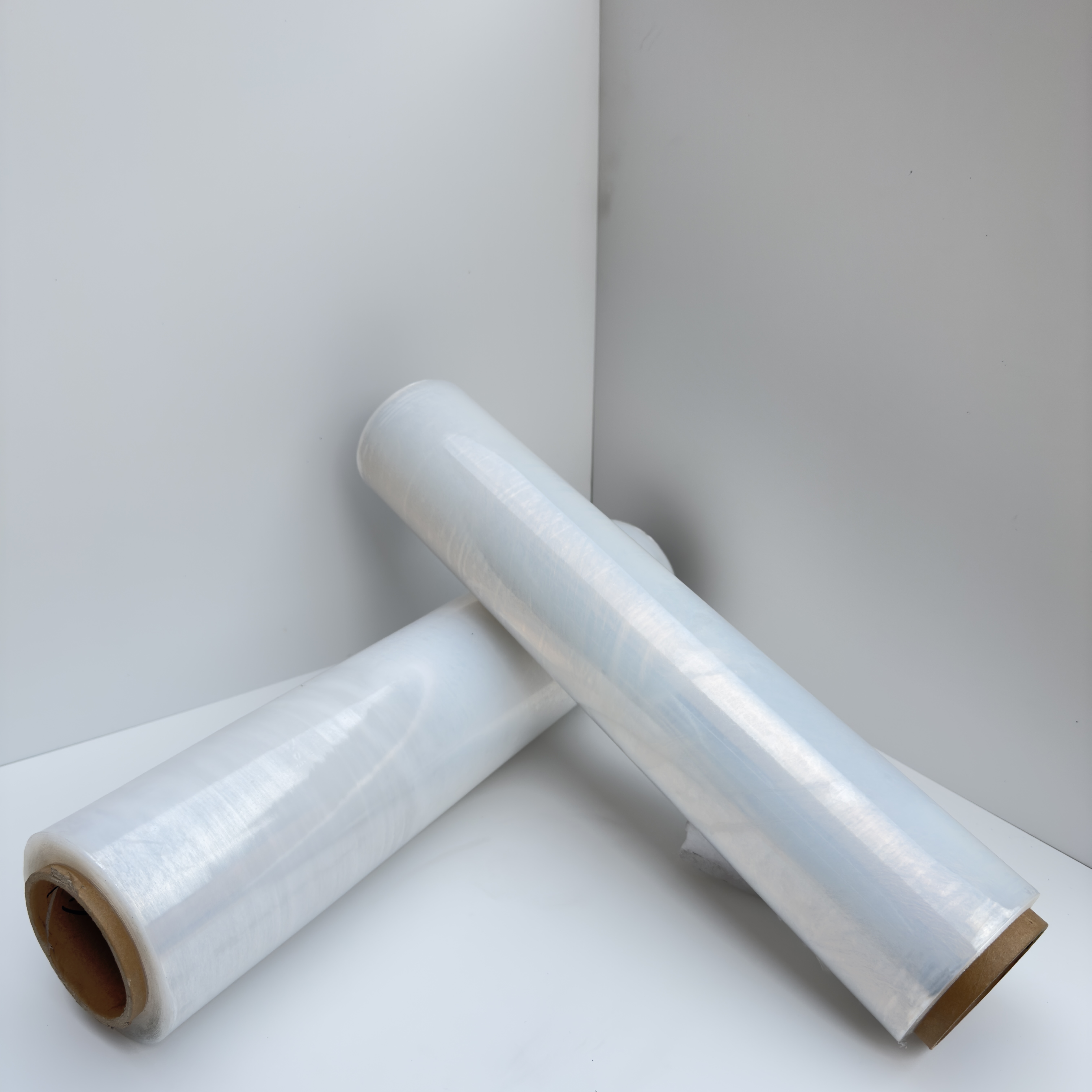
Selecting the optimal wrap requires technical evaluation. You must analyze the manufacturing process and understand physical yield metrics. We recommend consulting ISTA (International Safe Transit Association) testing standards to verify load stability before making bulk purchases.
Manufacturers produce stretch film using two primary extrusion methods. Each method drastically alters how the plastic reacts to heat and tension.
Blown Film: Extruders blow air into the hot resin, creating a bubble. This process cools the plastic slowly. It offers superior puncture resistance and exceptional multi-directional tear resistance. Blown film behaves like an interlocking web. It makes it ideal for sharp, heavy, high-heat industrial loads like ceramics.
Cast Film: Extruders push resin through a flat die over chilled rollers. The plastic cools almost instantly. Cast film provides significantly quieter unwinding. It delivers high clarity. It is best suited for environments requiring rapid barcode scanning without compromising essential thermal stability.
We provide a clear summary chart below to simplify evaluation.
Feature Profile | Blown Extrusion Film | Cast Extrusion Film |
|---|---|---|
Puncture Resistance | Exceptionally High | Moderate to High |
Tear Propagation | Stops tears effectively (Multi-directional) | Tears can spread if compromised |
Visual Clarity | Hazy, dull finish | Crystal clear, highly reflective |
Unwind Noise | Very loud, sharp noise | Near silent unwind |
Ideal Heat Application | Post-kiln materials, sharp building products | Hot-fill food, beverage, automated scanning lines |
Gauge alone does not guarantee performance. You must measure dynamic yield capability.
Pre-stretch capacity: You must assess how far the film can stretch before applying it. Machines often stretch film 200% to 300%. The film must handle this extreme elongation before losing its heat-resistant properties. High-quality resins maintain molecular integrity even when stretched thinly over a hot pallet.
Load containment force: This represents the continuous pressure the film applies to the load post-cooling. It is the ultimate indicator of success. Vendors should provide empirical data on containment force retention. Demand exact metrics detailing force thresholds measured at specific temperature spikes.
Corporate sustainability mandates aggressively target packaging waste. Facility managers frequently struggle to align these green initiatives with strict performance requirements.
Facilities must often meet strict environmental standards. Regulators demand significant reductions in single-use plastic consumption. However, you cannot compromise the structural integrity of high-heat loads. Shrinking your carbon footprint means nothing if product damages skyrocket. Damaged products create exponential waste, negating any eco-friendly packaging benefits. Finding a balanced solution remains a primary engineering challenge.
Recent advancements in polymer nanotechnology solve this exact dilemma. Integrating an Eco-Friendly Transparent Stretch Wrap represents a highly viable solution. Manufacturers now utilize recycled resins alongside virgin polymers. They employ downgauged multi-layer extrusion. This technique stacks dozens of micro-layers into a single, ultra-thin film. It reduces the total plastic mass significantly. Yet, it maintains the sheer strength and heat resistance of older, much thicker films.
Greenwashing remains rampant in industrial packaging. You must ensure vendors can provide concrete spec sheets. These sheets must prove their eco-friendly lines match the melting point of standard high-temp counterparts. They must also confirm identical load holding force. Look for certifications backing post-consumer recycled (PCR) content claims. Perform strict in-house testing before switching entirely to sustainable rolls.
Best Practice: Always run a 30-day isolated pilot program when testing sustainable high-temp film. Monitor the rejection rate closely compared to your legacy wrap.
Purchasing the correct film only solves half the problem. You must adapt your facility processes to maximize material yield. Improper execution leads to immediate equipment failure and wasted inventory.
Upgrading your film requires recalibrating automated wrappers immediately. You cannot run advanced thermal film on outdated tension settings.
Inspect the Pre-Stretch Carriage: Ensure rollers are clean and free of old resin buildup. Sticky rollers warp new film instantly.
Adjust Pre-Stretch Gears: Change the gear ratios to match the new film’s specific yield profile. Stretching a 200% yield film to 300% causes immediate snapping.
Modify Tension Settings: Tune the secondary tension applied between the carriage and the pallet. Hot loads require specialized tension zones, often wrapping tighter at the base and looser near the top.
Perform a Dry Run: Wrap a dummy pallet. Measure the film width on the load (neckdown). Excessive neckdown indicates improper machine tension.
Even highly durable films degrade over time. Heat-resistant properties do not mean the roll is invincible in storage. Environmental factors ruin pallets of wrap before they ever reach the machines.
Implement strict First-In, First-Out (FIFO) stock rotation. Warehouse teams must use older rolls first. Store rolls away from direct sunlight. UV rays severely damage polymer elasticity. Keep the inventory isolated from extreme facility heat prior to use. High ambient storage temperatures cause premature roll telescoping. Telescoping occurs when the inner layers of the roll slide outward, creating a cone shape. A telescoped roll becomes completely unusable on automated wrapping equipment.
Never sign long-term procurement contracts based solely on marketing brochures. You must demand operational proof.
Request sample rolls for controlled trial runs. Wrap several live pallets during normal production hours. Measure the post-wrap load containment force immediately after wrapping. Use a standardized pull-plate tool. Then, let the hot load cool completely. Measure the containment force again 24 hours post-cooling to verify stability. If the pressure drops significantly, the film failed the thermal stress test. You must audit multiple vendors simultaneously to establish a baseline.
Transitioning to durable high-temperature stretch film rolls serves as a strictly necessary risk-mitigation strategy. It effectively secures hot-fill processes, post-kiln logistics, and high-friction operations against catastrophic failure. By moving away from standard wraps, you protect your product margins and drastically improve warehouse safety.
For immediate procurement next steps, audit your current film failure rates thoroughly. Define the maximum operational temperatures your loads experience before they reach the dock doors. Request detailed thermal performance spec sheets from your shortlisted manufacturers to verify their claims.
Finally, contact experienced packaging engineers for a comprehensive site audit. They will perfectly match your specific high-temp applications with the correct machine-grade or sustainable film. Taking these proactive steps ensures your loads remain unitized, safe, and entirely ready for the rigors of modern distribution.
A: Most industrial high-temp films maintain integrity up to 150°F - 160°F (65°C - 71°C) before performance drops, though specialized variants exist for harsher environments.
A: No, but automated pre-stretch carriages must be recalibrated for the specific gauge and tension limits of the thermal film to maximize yield.
A: Yes, modern multi-layer extrusion techniques allow eco-friendly wraps to achieve identical thermal and puncture-resistant properties to virgin resin films, provided they are properly spec'd by the manufacturer.
A: Yes. Like all linear low-density polyethylene (LLDPE) products, it has a shelf life (typically 12-18 months). Proper FIFO rotation is critical to ensure optimal performance.


