
Views: 0 Author: Site Editor Publish Time: 2026-10-05 Origin: Site


Carton seal failure carries hidden logistical expenses that ripple through your entire operation. Product damage, transit delays, and compromised supply chain integrity directly impact your bottom line. Selecting the correct adhesive often challenges procurement and packaging teams. Choosing based solely on unit expenditure frequently leads to popped flaps and high return rates. Environmental, material, and transit variables demand careful consideration before application. We must technically evaluate acrylic vs hot melt BOPP tape to prevent these failures. The optimal choice depends strictly on carton weight, transit conditions, load shifting, and storage duration. You need a reliable seal that holds from the warehouse floor to the final destination. Let's break down the exact performance metrics of these two dominant adhesives. We will look at how they interact with different corrugated boards and temperature zones.
Hot melt adhesives deliver superior initial tack and high shear strength, making them the standard for heavy-weight cartons, shifting loads, and high-stress transit environments.
Acrylic adhesives offer unmatched longevity, stable adhesion, UV resistance, and resistance to aging across extreme temperature fluctuations, ideal for cold storage and long-term warehousing.
Carton material matters: highly recycled corrugated boards and porous fiberboards require the aggressive bonding properties of hot melt, while virgin fiberboards pair well with both.
While acrylic tape often presents a lower upfront cost per roll, hot melt provides superior ROI for heavyweight shipments where seal failure is a risk.
Selecting a reliable BOPP tape supplier is critical to ensuring consistent adhesive coat weight and film thickness, which directly impacts automated packaging line efficiency.
Biaxially Oriented Polypropylene serves as the industry-standard backing material for carton sealing tape. Manufacturers melt polypropylene resin and extrude it into a thick sheet. They then pass this sheet through heated rollers and stretch it in two distinct directions: the machine direction and the transverse direction. This biaxial orientation aligns the polymer chains, creating exceptional tensile strength and dimensional stability. The resulting film resists snapping under heavy tension. It prevents the tape from stretching out of shape when pulled tight across a carton. It also provides a robust barrier against moisture, chemical exposure, and abrasion. These physical properties make BOPP packing tape highly reliable for securing corrugated boxes. The film acts as the structural foundation, holding the package together under physical stress.
While the BOPP film provides necessary structural integrity, the applied packaging tape adhesive dictates actual bonding behavior. Corrugated board is not perfectly flat. It consists of woven paper fibers with microscopic peaks and valleys. The adhesive must flow into these valleys to create a mechanical lock. The adhesive determines how quickly the tape grips the carton surface. It controls the tape's environmental resilience against temperature shifts and humidity. Different chemical compositions react uniquely to pressure, dwell time, and surface porosity. Understanding these chemical differences allows you to match the tape directly to your specific operational demands on the packaging line.
Hot melt adhesives utilize a precise blend of synthetic rubbers, such as SBS or SIS block copolymers, combined with hydrocarbon tackifying resins. Manufacturers heat these solid materials until they liquefy. They then pump the liquid through a hot melt slot die, coating a uniform layer onto the BOPP film. The synthetic rubber provides internal strength and flexibility. The hydrocarbon resins deliver aggressive stickiness. This specific chemical combination creates an adhesive designed for immediate, high-strength bonding. The formulation remains highly active at room temperature, ready to grip surfaces instantly upon contact.
Hot melt tape excels in high-stress physical environments. It offers exceptional initial tack. It grabs the carton surface immediately without requiring extended pressure. It also boasts superior holding power, known technically as shear strength. This high shear strength prevents the tape from sliding or creeping when subjected to constant downward force from heavy contents. Hot melt aggressively bonds to almost any surface. It easily penetrates the short, dusty fibers of highly recycled corrugated boards. It also grips well onto porous or slightly dirty fiberboards where other adhesives fail to find an anchor point.
You should deploy hot melt tape for demanding physical applications. It is the optimal choice for overstuffed boxes that exert outward pressure on the flaps. It performs exceptionally well for heavy shipping carton sealing where loads frequently shift during transport. Automated case tapers benefit greatly from hot melt due to its quick-release properties and instant grab. It handles the rapid application speeds of high-volume packaging lines seamlessly. Hot melt remains highly effective for transit through temperate climates where extreme temperature fluctuations are minimal.
Despite its physical strength, hot melt tape has strict environmental limitations. It is highly susceptible to extreme temperatures. You must distinguish between application temperature and service temperature. Applying hot melt below 45°F often results in a rigid adhesive that fails to penetrate the carton fibers. The rubber hits its glass transition temperature and turns into a brittle solid. Exposing sealed cartons to service temperatures above 120°F causes the synthetic rubber to soften, leading to sliding and flap pop-open. Hot melt also exhibits poor UV resistance. Prolonged exposure to sunlight or fluorescent warehouse lighting causes the adhesive to yellow, oxidize, and eventually become brittle.
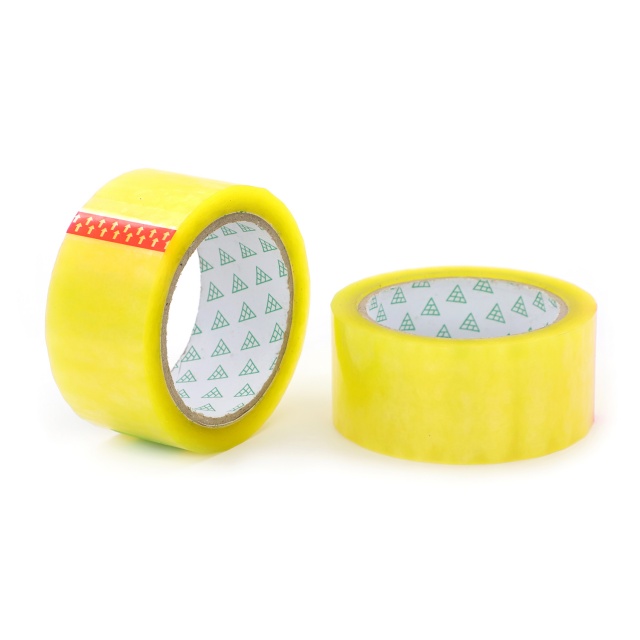
Acrylic adhesives rely on water-based emulsion or solvent-based acrylic polymers. Emulsion acrylics are the standard for packaging tapes. Manufacturers coat these liquid polymers onto the BOPP film and pass the film through a long drying oven. The water evaporates, leaving the solid acrylic polymer behind. This chemical structure differs fundamentally from synthetic rubber. Acrylic polymers cross-link to form a highly stable, uniform adhesive layer. This composition prioritizes long-term stability and gradual bond strengthening over immediate, aggressive stickiness. The formulation resists chemical breakdown and maintains its integrity over extended periods.
Acrylic tape delivers unmatched environmental resilience. It offers excellent optical clarity, making it virtually invisible on printed cartons. The adhesion remains incredibly stable over time, resisting aging, oxidation, and degradation from UV light. Acrylic adhesives operate effectively across a remarkably broad temperature range. They maintain their bond in freezing cold storage conditions and withstand high-heat environments without melting or losing shear strength. The bond actually strengthens as the adhesive cures over the first 24 hours after application, flowing deeper into the substrate.
Acrylic tape fits perfectly into long-term storage strategies. It is the definitive choice for lightweight to medium-weight cartons that require secure sealing over months or years. Cold storage environments, such as refrigerated food packaging facilities, rely heavily on acrylic tape to prevent seal failure in sub-zero temperatures. It also serves consumer-facing packaging exceptionally well. When aesthetics matter, the clear, non-yellowing nature of acrylic ensures the packaging looks clean and professional upon arrival at the retail destination.
Acrylic tape requires specific application conditions for maximum effectiveness. It possesses lower initial tack compared to hot melt. You must apply firm wipe-down pressure and allow sufficient dwell time for the adhesive to flow into the carton fibers. It shows reduced effectiveness on highly recycled, short-fiber corrugated boxes. The adhesive struggles to grab onto loose, dusty recycled content. Instead of penetrating the board, the acrylic grabs the surface dust and peels off. Acrylic tape also presents vulnerability when used on heavyweight boxes. If heavy contents shift violently during transit, the lower shear strength of acrylic allows the tape to stretch or tear.
Evaluating adhesion requires comparing immediate grab against permanent bonding. Hot melt provides an aggressive, immediate tack. It locks onto the carton the second it makes contact. This makes it superior for boxes prone to shifting, as the high shear strength resists sliding forces immediately. Acrylic provides a gradual, permanent bond. It feels less sticky to the touch initially. However, once applied with proper pressure, the acrylic polymers flow into the substrate and strengthen over time. For heavy, dynamic loads, hot melt wins. For static, long-term holds, acrylic dominates.
Environmental factors dictate adhesive performance on the warehouse floor and inside the trailer. Hot melt operates within a narrow temperature window. It thrives in standard warehouse conditions but fails rapidly in extreme cold or heat. UV exposure quickly degrades hot melt, causing the rubber to oxidize and lose its grip. Acrylic withstands extreme environmental stress. It handles freezing temperatures without becoming brittle. It survives high heat without softening. Acrylic ignores UV light entirely, maintaining its clarity and holding power even when stored near windows or under bright warehouse lights for years.
The type of corrugated board you use directly impacts tape selection. Corrugated boards vary wildly in fiber length and surface dust. Hot melt interacts aggressively with almost any substrate. It easily penetrates the dense, short fibers of 100% recycled corrugated materials. It grips dusty or slightly irregular surfaces effectively. Acrylic interacts best with clean, virgin fiberboard. The long fibers of virgin board allow the acrylic polymers to anchor securely. When applied to highly recycled board, acrylic often struggles to find a solid anchor point, increasing the risk of the tape lifting along the edges.
Corrugated Board Type | Hot Melt Performance | Acrylic Performance |
|---|---|---|
100% Virgin Kraft Liner | Excellent | Excellent |
High Recycled Content (Test Liner) | Excellent | Poor to Fair |
Dusty or Dirty Surfaces | Good | Poor (Lifts easily) |
Printed or Coated Cartons | Fair | Excellent |
Application techniques influence the final seal quality. Manual hand dispensers require smooth operation. Acrylic tape unwinds smoothly and quietly from the roll, reducing operator fatigue during manual application. However, manual application often lacks the consistent pressure needed for acrylic to reach maximum adhesion. High-speed automated packaging lines demand different characteristics. Hot melt releases easily from the roll at high speeds without snapping. Automated tapers utilize mechanical wipe-down rollers that apply the exact pressure needed to activate hot melt's instant tack, making it the preferred choice for machine application.
Automated Taper Setup for Hot Melt: Adjust the brake core tension to allow rapid unwind without over-spooling. Set the front and rear wipe-down rollers to medium pressure to activate the immediate tack.
Automated Taper Setup for Acrylic: Increase the brake core tension slightly to control the smooth unwind. Increase the spring tension on the wipe-down rollers to force the acrylic adhesive deep into the corrugated fibers.
Manual Application for Hot Melt: Apply the tape centrally over the seam. A light pass with the dispenser's plastic wipe-down blade is sufficient for a secure bond.
Manual Application for Acrylic: Apply the tape over the seam. You must physically press down along the entire length of the tape with your hand or a squeegee to ensure the adhesive wets out properly.
Procurement teams often focus entirely on the initial material investment per roll. This narrow view ignores the broader financial impact of packaging failures on the shipping dock. Acrylic tape generally presents a lower upfront material investment. This makes it highly attractive for budget-conscious operations. However, you must analyze the hidden operational expenses. If you deploy acrylic tape incorrectly on heavy or shifting loads, the seals will fail in transit. Failed seals require repacking labor, replacement materials, and often result in damaged products. Using hot melt tape on heavy loads eliminates these hidden expenses, providing better overall value and securing your carton sealing tape strategy.
Adhesive choice directly impacts the visual longevity of branded packaging. When ordering custom printed BOPP tape, consider how the tape will age in the warehouse. Acrylic tape maintains absolute clarity over time. It prevents logo distortion and ensures your brand colors remain vibrant, even after months in storage. Hot melt tape tends to yellow as the rubber oxidizes. This yellowing alters the appearance of printed logos, making white backgrounds look aged or dirty. For consumer-facing branded tape, acrylic provides superior aesthetic durability.
Improper storage degrades tape performance before it ever reaches the packaging line. You must implement strict inventory storage controls. Store all tape inventory in climate-controlled environments. Maintain temperatures between 60°F and 80°F. Keep humidity levels around 50%. Storing hot melt tape in a hot warehouse accelerates the degradation of the synthetic rubber, causing the rolls to ooze adhesive from the sides. Storing acrylic tape in freezing conditions before application makes the adhesive too rigid to flow properly. Rotate your stock using a first-in, first-out method to ensure you use the tape while the adhesive remains fresh and active.
Storage Condition | Hot Melt Tape Reaction | Acrylic Tape Reaction |
|---|---|---|
High Heat (Above 90°F) | Adhesive oozes, rolls telescope | Remains stable, no oozing |
Freezing (Below 32°F) | Adhesive shatters upon impact | Adhesive stiffens but recovers |
High UV Exposure | Rapid yellowing and embrittlement | No visual or structural change |
High Humidity | Minimal impact on adhesive | Minimal impact on adhesive |
Partnering with a reliable BOPP tape supplier guarantees consistent performance on your packaging line. You must evaluate their quality control metrics rigorously. Demand consistent adhesive coat weight. Uneven coating creates dry spots that lead to sudden seal failures during transit. Verify accurate film micron thickness. If a supplier promises a 50-micron tape but delivers 45 microns, the tape will snap under tension on the automated taper. Inspect sample rolls for telescoping. Telescoping occurs when the tape layers slide out of alignment, indicating poor winding tension during manufacturing. Poorly wound tape jams automated case tapers and slows down production.
Professional suppliers validate their products through standardized testing. Ask your supplier for specific data sheets. Request Peel Adhesion data based on the PSTC-101 standard. This measures the force required to remove the tape from a standard steel panel. Request Tack data based on the PSTC-6 standard. This rolling ball test measures how quickly the adhesive grabs a surface. Request Shear Strength data based on the PSTC-107 standard. This measures how long the tape can hold a specific weight before sliding off. Reviewing these testing protocols ensures you purchase tape engineered for your specific operational demands.
Testing Standard | What It Measures | Why It Matters for Packaging |
|---|---|---|
PSTC-101 (Peel Adhesion) | Force to remove tape at 180 degrees | Indicates overall bond strength to the carton surface. |
PSTC-6 (Rolling Ball Tack) | Distance a steel ball rolls on the adhesive | Measures immediate grab. Critical for automated tapers. |
PSTC-107 (Shear Strength) | Time tape holds a hanging weight | Predicts failure on heavy, shifting, or overstuffed boxes. |
Audit your current carton weights and identify the percentage of recycled content in your corrugated boards to establish a baseline for adhesive requirements.
Map the temperature profiles of your warehouse, transit routes, and final storage destinations using data loggers to identify potential failure zones.
Request sample rolls from your supplier and conduct live line trials to validate adhesive performance under actual working conditions before committing to a full order.
Calibrate the wipe-down rollers and tension springs on your automated case tapers to match the specific release characteristics of your chosen tape.
A: Acrylic tape generally requires a lower initial material investment per roll due to its manufacturing process. However, choosing based on initial expenditure alone increases overall packaging expenses if the adhesive fails. If you use acrylic on heavy or shifting cartons, the resulting popped flaps, repacking labor, and product damage will far exceed any upfront savings.
A: You should avoid using acrylic tape for heavy shipping cartons. Acrylic possesses lower shear strength compared to hot melt. It often fails on heavy, overstuffed boxes or loads prone to shifting during transport. The weight and movement cause the acrylic bond to stretch and eventually tear away from the carton surface.
A: Hot melt tape turns yellow due to the oxidation of its synthetic rubbers and hydrocarbon resins. When exposed to UV light, such as sunlight or fluorescent warehouse lighting, the chemical structure of the rubber breaks down. This aging process causes the adhesive to discolor, yellow, and eventually become brittle.
A: Acrylic adhesive is significantly better for cold storage. Water-based and solvent-based acrylic polymers maintain a stable bond in freezing temperatures. Unlike hot melt, which becomes rigid and loses its grip in the cold, acrylic remains flexible and securely anchored to the carton throughout extended cold storage durations.
A: Custom printed tape performs identically to clear tape, provided the printing process is executed correctly. The printing ink sits between the film and a protective top-coat, or under the adhesive layer. The printing process does not degrade the adhesive as long as the manufacturer uses appropriate curing methods.
A: When stored properly in a climate-controlled environment between 60°F and 80°F with 50% humidity, acrylic tape typically lasts 12 to 24 months. Hot melt tape generally has a shorter shelf life of 12 months. You must rotate your inventory regularly to prevent the adhesives from degrading before application.
A: Initial tack refers to the immediate stickiness of the tape upon contact with a surface, requiring minimal pressure. Holding power, or shear strength, measures the tape's ability to resist sliding or creeping under constant downward stress over time. Hot melt excels in both, while acrylic builds holding power gradually.


