
Views: 0 Author: Site Editor Publish Time: 2026-09-22 Origin: Site


Increasing regulatory scrutiny on food contact materials forces commercial kitchens, food processors, and retailers to re-evaluate their packaging consumables. Procurement and operations teams must balance superior mechanical performance with modern compliance, sustainability mandates, and material yields. Choosing the wrong film risks food spoilage, regulatory fines, or operational inefficiencies on the packaging line. Resolving this requires a technical comparison of the two dominant materials in the market. This guide provides an evidence-based breakdown of PE vs PVC plastic wrap to help you align material properties with your specific commercial application. We will examine how these films behave on automated wrappers, their chemical stability in cold storage, and what happens when they contact high-fat foods.
Performance vs. Safety Trade-off: PVC offers superior cling, stretch, and clarity, but carries regulatory and health concerns due to plasticizers. PE is the universally recognized food safe plastic wrap but traditionally lacks the aggressive cling of PVC.
Barrier Properties: PVC provides a better oxygen and moisture barrier, extending the shelf life of highly perishable goods like fresh meat, whereas PE is highly breathable, making it suitable for produce and short-term storage.
Environmental and Compliance Factors: PE plastic wrap is highly recyclable and free of phthalates, aligning with global sustainability and health mandates. PVC faces increasing bans and restrictions in food packaging film applications.
Supplier Selection: Transitioning between materials requires vetting a plastic wrap supplier capable of providing specification sheets, compliance certificates, and consistent gauge tolerances.
Establishing baseline needs for your facility dictates your material choice. You must evaluate manual versus automated wrapping stations. Automated wrappers demand films with high tensile strength and consistent stretch. The feed rollers and tension belts on these machines require a film that will not snap under high-speed operation. Manual stations require easy tearing and immediate tack. Operators working on a fast-paced prep line need a film that cuts cleanly on a slide cutter or serrated edge without bunching.
You also need to define required shelf-life extensions. Different films offer vastly different barrier properties. Wrapping a tray of bone-in ribeyes requires a completely different oxygen transmission rate than wrapping a pallet of fresh broccoli. Visual presentation standards also play a major role in material selection. Retail environments demand pristine product visibility to drive consumer purchasing decisions.
Visual merchandising relies heavily on film clarity. You must determine if your application requires high-clarity, anti-fog films. Refrigerated display cases make this a priority. Supermarkets and delis depend on clear product visibility. Condensation buildup under the film obscures the product and degrades consumer appeal. You need a food packaging film engineered to disperse water droplets effectively across the surface rather than allowing them to bead up and block the view.
Regulatory compliance remains a non-negotiable factor. You must outline the necessity of FDA (21 CFR) or EFSA approvals. Local regulatory frameworks also dictate direct food contact standards. This becomes particularly stringent concerning fatty or acidic foods. Certain plastics leach chemicals when exposed to fats or high acidity. You must verify that your chosen material holds the appropriate certifications for your specific food types, backed by rigorous migration testing data.
Evaluating operational yield requires looking beyond the invoice. You must differentiate between the per-roll yield and the actual waste generated on the floor. Factor in the stretch yield of the film. Calculate the impact of tear waste during busy shifts. Account for potential spoilage caused by inadequate seals. You should also consider equipment maintenance requirements. Some materials accelerate wear and tear on automated packaging machinery, leading to frequent part replacements and costly downtime.
Polyvinyl Chloride dominates legacy food wrapping applications. Its chemical composition relies heavily on the addition of plasticizers. Manufacturers use additives like DEHA or specific phthalates. These plasticizers create its signature stretch and stickiness. They also provide the unique memory effect. When stretched over a container, PVC plastic wrap snaps back tightly. This creates a secure, drum-tight seal that resists puncturing even when wrapping irregular shapes.
Performance advantages make PVC highly desirable in retail environments. It offers exceptional optical clarity. The material snaps back tightly over uneven containers. It provides excellent oxygen and moisture barrier properties. These barriers prevent rapid oxidation of fresh foods. They also lock in moisture to prevent dehydration. This combination of traits ensures products look fresh and appealing under harsh retail lighting for extended periods.
Specific commercial use cases highlight where PVC excels. Supermarket meat departments rely on it heavily. Deli counters use it to wrap sliced meats and cheeses. These environments demand tight, clear presentation. Moisture retention is a priority for maintaining product weight and texture. Anti-fog capabilities keep the meat visible in cold display cases. PVC handles these demanding retail requirements effortlessly, providing a premium look that consumers associate with freshness.
Compliance risks and drawbacks increasingly threaten PVC usage. Health concerns grow regarding plasticizer migration. These chemicals can leach into fatty foods like cheese and meat. Environmental toxicity during manufacturing presents another major issue. PVC production involves hazardous chemicals and chlorine. Furthermore, the material is generally non-recyclable in standard municipal streams. It often ends up in landfills or incinerators, releasing toxic byproducts into the atmosphere.
Equipment wear and tear represents a hidden operational burden. Automated wrappers often use hot wires to cut the film. When heated, PVC releases trace amounts of hydrogen chloride gas. This gas is highly corrosive. Over time, it degrades metal components on packaging equipment. You will face increased maintenance demands and potential downtime. Replacing corroded parts negates some of the initial material yield advantages and disrupts production schedules.
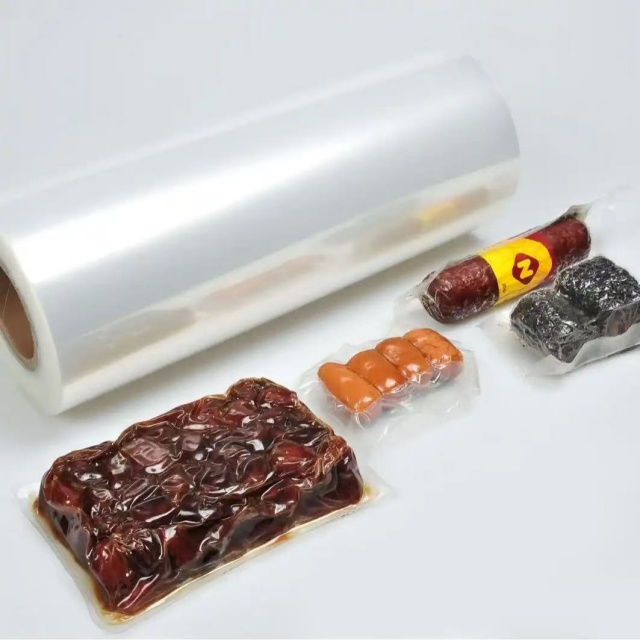
Polyethylene offers a cleaner chemical profile. The composition typically utilizes Low-Density Polyethylene (LDPE) or Linear Low-Density Polyethylene (LLDPE). This structure provides inherent flexibility. It achieves this without the need for chemical plasticizers. The absence of phthalates and DEHA makes it inherently safer. It serves as a universally recognized food safe plastic wrap for direct contact across all food categories.
Technological advancements have transformed PE capabilities. Modern manufacturing utilizes multi-layer co-extrusion techniques. Manufacturers often blend PE with EVA (Ethylene Vinyl Acetate). This blending drastically improves clarity and stretch. It bridges the historical performance gap with PVC. You now get a film that stretches well and looks clear. These engineering improvements make PE a viable replacement in demanding commercial settings where presentation matters.
The performance profile of modern PE is robust. It boasts high tensile strength. It offers excellent puncture resistance against sharp edges or bones. PE is also highly breathable compared to PVC. This breathability allows certain gases to escape. It prevents the buildup of ethylene gas in produce. This characteristic extends the shelf life of specific agricultural products significantly by preventing premature ripening and rot.
Commercial use cases for PE plastic wrap continue to expand rapidly. It dominates agricultural packaging and produce transport. Button-mushroom wrapping relies on its breathability to prevent slime. Bakery goods benefit from its moisture regulation. General-purpose commercial kitchen storage utilizes it for safe, short-term holding. It excels wherever direct food contact safety is the primary concern, especially in high-volume prep kitchens.
Operational limitations still exist despite recent advancements. Acknowledge the historical drawbacks of PE. It possesses a lower cling factor than PVC. It requires more effort to achieve a secure seal on certain container materials like textured plastics or unglazed ceramics. Clarity, while improved, sometimes falls short of premium PVC. You also need specific anti-fog additives for refrigerated displays. Without these additives, condensation quickly obscures the packaged product.
Comparing chemical stability reveals stark differences. You must evaluate how both materials react to acidic, fatty, or hot foods. PE maintains chemical stability across a wide range of food types. It does not leach harmful compounds into fats or acids. PVC requires strict formulation controls to meet safety standards. The plasticizers in PVC migrate easily into high-fat foods. This migration poses significant regulatory and health risks, prompting many facilities to phase it out entirely.
Mechanical performance impacts daily usability. Evaluate the stickiness of the cling film. PVC relies on chemical cling, providing aggressive adhesion to almost any surface. PE relies on static or tackifier-based cling, which is generally weaker and requires a tighter physical wrap to hold. Compare stretchability during high-speed automated wrapping. PVC stretches easily and recovers its shape. PE requires more precise tension control to prevent tearing. Automated machines often need recalibration when switching materials.
Temperature tolerance dictates storage applications. Assess performance in blast chillers and deep freezers. PE remains flexible at extremely low temperatures. It resists cracking and maintains its seal even at sub-zero temperatures. PVC can become brittle and shatter in freezing conditions, compromising the protective barrier. Evaluate hot holding and microwave safety. PE offers superior chemical stability under heat. Microwaving PVC carries a severe risk of plasticizer leaching into the food.
Transmission rates determine shelf-life extension capabilities. Analyze Oxygen Transmission Rates (OTR) and Moisture Vapor Transmission Rates (MVTR). PVC features low OTR and MVTR. It prevents freezer burn and oxidation exceptionally well. Standard PE has higher transmission rates. It allows more oxygen and moisture to pass through. This makes PE better for respiring produce but worse for long-term meat storage where oxidation leads to discoloration.
Sustainability profiles contrast sharply between the two. PE is highly recyclable. Facilities often accept it in flexible film recycling streams (RIC #4). It burns cleanly without releasing toxic halogens. PVC presents a hazardous waste classification (RIC #3). Its chlorine content complicates recycling efforts. Incinerating PVC releases dioxins and hydrogen chloride. Corporate sustainability goals strongly favor transitioning away from PVC to meet modern environmental standards.
Performance Metric | PVC Plastic Wrap | PE Plastic Wrap |
|---|---|---|
Chemical Composition | Polyvinyl Chloride + Plasticizers (DEHA/Phthalates) | Polyethylene (LDPE/LLDPE) + EVA blends |
Cling Mechanism | Chemical cling (Aggressive adhesion) | Static or Tackifier cling (Moderate adhesion) |
Food Safety (Fatty/Acidic) | High risk of chemical migration | Universally safe and stable |
Cold Storage Flexibility | Poor (Becomes brittle and prone to shattering) | Excellent (Remains flexible at sub-zero temps) |
Breathability (OTR/MVTR) | Low (High barrier against oxygen/moisture) | High (Excellent for respiring produce) |
Recycling Classification | RIC #3 (Hazardous, difficult to recycle) | RIC #4 (Widely accepted in film streams) |
Direct material costs rarely tell the whole story. You must analyze the raw material cost differences alongside operational yield. PE resin generally costs less than PVC resin. This makes the per-roll yield of PE attractive. However, operational habits impact the final efficiency. If workers use twice as much PE to achieve the same seal as PVC, the yield advantage vanishes. You must measure the actual material used per wrap and train staff to optimize their wrapping techniques.
Hidden maintenance demands impact your bottom line. Factor in the reduced maintenance requirements on automated wrappers. Using PE eliminates the emission of corrosive gases during heat sealing. Your cutting wires, heat pads, and metal components will last significantly longer. You will experience fewer breakdowns and lower replacement part demands. These maintenance savings often offset any slight increases in material usage or transition efforts required during the initial switch.
Evaluating a plastic wrap supplier requires strict auditing criteria. You must request comprehensive migration test reports. Demand ISO certifications to ensure manufacturing consistency. Ask for consistent micron thickness guarantees to prevent weak spots in the film that lead to blowouts on the packaging line. Assess their supply chain stability and historical lead times. Verify their minimum order quantities (MOQs) for custom widths, specific tints, or required perforations.
Supplier Audit Criteria | Verification Document Required | Operational Impact |
|---|---|---|
Direct Food Contact Safety | FDA 21 CFR or EFSA Migration Test Reports | Prevents regulatory fines and ensures consumer safety. |
Manufacturing Consistency | ISO 9001 / ISO 22000 Certificates | Guarantees uniform gauge thickness and prevents line jams. |
Chemical Compliance | REACH Compliance Declaration | Ensures absence of banned phthalates and heavy metals. |
Supply Chain Reliability | Historical Lead Time Reports & MOQ Terms | Prevents stockouts during peak seasonal production runs. |
Transitioning equipment presents the most immediate friction. Switching from PVC to PE alternatives on existing automated wrappers requires mechanical adjustments. PE requires different cutting blade types. You must swap hot wires for serrated blades to ensure clean cuts without melting the film. PE also demands lower heat-seal temperatures. If the temperature remains too high, the PE film will melt, foul the machinery, and cause extensive downtime for cleaning.
Managing shelf-life expectations requires a systematic approach. You must formulate a rigorous testing protocol before rolling out a new material facility-wide. Ensure the switch to PE does not negatively impact expiration dates. Monitor moisture retention in packaged goods over several days in a controlled environment. Evaluate the visual appeal under retail lighting. You need empirical data to prove that the new film meets or exceeds your established quality standards.
Staff training prevents operational disruptions and material waste. You must outline the need to train kitchen or packaging staff. They need to understand the different handling characteristics of PE. Teach them how to stretch it properly without tearing. Show them how to secure the seal using its specific tack profile. Proper training prevents excessive waste and ensures food safety protocols remain intact during high-volume shifts.
Audit current wrapper heat settings and identify all hot wire cutting mechanisms that need replacement.
Order sample rolls of multi-layer PE to test gauge thickness and stretch limits.
Run a small batch of products through the wrapper to test seal integrity and machine tension.
Monitor the test batch in cold storage for 48 hours to check for condensation buildup or seal failure.
Train floor staff on the new tension requirements for manual wrapping stations to prevent over-stretching.
PVC remains the performance leader for specific high-barrier, high-presentation needs. It excels in fresh meat packaging where clarity and oxygen barriers are paramount for retail display. However, PE represents the mandatory future for broad food-safe and sustainable applications. Regulatory pressures and corporate sustainability mandates make PE the logical long-term choice for most commercial food operations looking to future-proof their packaging lines.
Use a simple shortlisting logic for your procurement decisions. Choose PVC for maximum cling, clarity, and barrier on non-fatty foods, provided local regulations permit it. Choose PE for guaranteed compliance across all food types. PE is essential for fatty foods, cold-storage flexibility, and meeting corporate sustainability goals. Align the material strictly with the operational environment and the specific demands of the food product being packaged.
Audit your current film inventory to identify areas where PVC is used unnecessarily on non-fatty or short-term storage items.
Request updated specification sheets and migration test reports from your current vendor to verify compliance with local food safety laws.
Order sample rolls of multi-layer, EVA-blended PE to test on your existing manual dispensers and automated equipment.
Adjust the heat settings and swap hot wires for serrated cutting mechanisms on your automated wrappers before running full production trials with PE.
A: Yes, PE is universally recognized as food safe. It does not contain chemical plasticizers like phthalates or DEHA. Its stable chemical structure prevents harmful migration, making it completely safe for direct contact with all food types, including highly acidic and fatty foods.
A: PVC offers unmatched mechanical performance for specific retail applications. It provides superior cling, exceptional stretch memory, and excellent anti-fog capabilities. Its high oxygen and moisture barrier properties are critical for keeping fresh meat looking appealing and preventing dehydration on supermarket shelves.
A: You should never microwave PVC. Heat causes the chemical plasticizers in PVC to leach rapidly into the food. PE is generally safer for microwave use due to its chemical stability, but you must ensure the specific PE formulation is explicitly labeled as microwave-safe to prevent melting.
A: PVC typically has a slight yellowish tint on the roll, stretches with high resistance, and emits a distinct, acrid chemical smell when burned. PE appears milky-clear on the roll, stretches more easily, and smells similar to a burning candle when exposed to a flame.
A: PE is significantly more environmentally friendly. It is often recyclable in flexible film streams (RIC #4) and burns cleanly. PVC (RIC #3) is considered hazardous due to its chlorine content, toxic manufacturing byproducts, and the release of dioxins if incinerated.
A: You should demand FDA 21 CFR compliance for US markets or EFSA standards for Europe. Look for ISO 9001 certification for manufacturing quality, REACH compliance regarding chemical usage, and specific, up-to-date migration testing documentation for direct food contact.


