
Views: 0 Author: Site Editor Publish Time: 2026-02-09 Origin: Site


Stretch film is frequently treated as a mere consumable commodity, often purchased based solely on the lowest price per roll. This procurement oversight inevitably leads to the hidden "iceberg" costs of logistics: catastrophic load failures, significant product damage, and excessive material waste. While the invoice price is visible, the true financial impact lies in the stability of your pallets and the efficiency of your warehouse operations. Operations leaders must distinguish clearly between the "price per roll" and the actual "cost per pallet wrapped."
This guide aims to shift the perspective from simple purchasing to strategic packaging engineering. We help procurement managers and operations directors evaluate machine stretch film based on rigorous data: load profiles, equipment compatibility, and Total Cost of Ownership (TCO). By moving beyond basic gauge comparisons, you ensure your products arrive safely while optimizing your packaging budget.
Match Film to Load Profile: Using standard film on irregular "Profile C" loads causes punctures; using heavy-duty film on uniform "Profile A" loads burns budget.
Containment Force > Gauge: The holding power (containment force) matters more than the thickness (gauge) of the film.
Machine Compatibility is Non-Negotiable: High-speed overhead arm machines require different film characteristics than standard entry-level turntables.
TCO Reality: The purchase price of film represents a fraction of the total packaging cost; load stability and damage prevention are the primary ROI drivers.
Before soliciting quotes or examining spec sheets, you must perform a technical audit of your current packaging environment. A roll of film that performs flawlessly on a low-speed turntable may fail instantly on a high-speed rotary arm wrapper. Success begins with compatibility.
The capabilities of your wrapping equipment dictate which films you can utilize effectively. Ignoring machine specifications is the leading cause of film breakage and inconsistent load containment.
Pre-Stretch Capability: You must verify if your stretch film machine utilizes powered pre-stretch rollers or simple friction brakes. Powered rollers can elongate film by 200% to 300% before applying it to the load. If you purchase a premium high-yield film for a machine with simple friction brakes (which only stretch 10–20%), you are paying for performance technology that you cannot use. Conversely, using a standard film on a high-pre-stretch machine will result in constant snapping.
Machine Speed & Type: differentiate your film needs based on the mechanics of the wrap.
Turntable Wrappers: generally operate at lower speeds (12–15 RPM). The load rotates, which generates centrifugal force. Films here need standard cling and puncture resistance.
Rotary Arm / Orbital Wrappers: used for high-speed lines or unstable loads (where the pallet sits still, and the arm rotates). These machines can exceed 30–40 RPM. They require films with rapid unwind capabilities to prevent "whiplash" breaks and snapping during the start/stop cycle.
Not all pallets are created equal. In the packaging industry, we categorize loads into three distinct profiles. Identifying which profile matches your inventory is critical for selecting the right resin blend.
| Profile Type | Description | Film Strategy |
|---|---|---|
| Profile A (Uniform) | Clean, square pallets with no protrusions. Example: Boxed goods stacked perfectly aligned with the pallet footprint. | Candidate for Downgauging: Since there are no sharp edges to puncture the film, you can use thinner, high-performance films to save money. |
| Profile B (Irregular) | Loads with protrusions less than 3 inches. Example: Pallets where boxes are slightly offset or mixed-SKU loads. | Standard Protection: Requires a balance of puncture resistance and holding force. Standard gauge films work best here. |
| Profile C (Aggressive) | Protrusions >3 inches, sharp corners, or odd shapes. Example: Construction materials, machinery parts, or scrap metal. | High Performance: Requires heavy-duty machine stretch film with superior puncture resistance and high elongation memory to prevent tearing. |
Once you understand your machinery and load profile, the next step is choosing the manufacturing method of the film. The two primary methods—Cast and Blown—result in films with vastly different physical properties.
Cast extrusion involves melting thermoplastic polymers and extruding them through a flat die onto a chilled roller. This process cools the film rapidly, organizing the molecules in a straight line.
Characteristics: Cast film is known for its high clarity, which makes it excellent for barcode scanning and reading labels through the wrap. It unwinds quietly and maintains a highly consistent gauge (thickness) throughout the roll.
Best Use Case: It is the go-to choice for high-volume warehousing where speed and noise reduction are priorities. If your operation packs thousands of "Profile A" or "Profile B" loads daily, cast film offers the best efficiency.
Trade-off: It generally has lower puncture resistance compared to blown film and less "cling" memory, meaning it may not hold aggressively irregular loads as tightly over time.
Blown film is created by blowing heated resin into a large bubble, which is then cooled by air. This process creates a crisscrossed molecular structure, making the film incredibly tough.
Characteristics: Blown film offers superior puncture and tear resistance. It has very high cling levels, ensuring the tails of the wrap stick firmly. However, it often has a "hazy" or dull appearance.
Best Use Case: Ideal for heavy, sharp, or extremely irregular loads ("Profile C"). Industries like construction, timber, and heavy machinery parts rely on blown film to prevent punctures from sharp corners.
Trade-off: The unwind process is significantly louder—sometimes sounding like ripping tape—which can be disruptive in small facilities. The lower clarity can also make scanning barcodes difficult without cutting the film.
Beyond the standard options, specific scenarios require engineered solutions:
Pre-Stretched Options: Some films are expanded at the stretch film manufacturer level. This is beneficial for operations with older machines that lack powered pre-stretch gears, allowing them to utilize the film's yield without mechanical stretching.
Vented/Perforated: These films have die-cut holes to allow airflow. They are essential for wrapping organic produce, frozen foods, or timber that needs to cure, preventing condensation buildup and spoilage.
UVI (Ultraviolet Inhibitor): Standard polyethylene degrades quickly under sunlight. UVI films are chemically treated to withstand UV radiation, making them necessary for lumber yards or construction sites where pallets are stored outdoors.
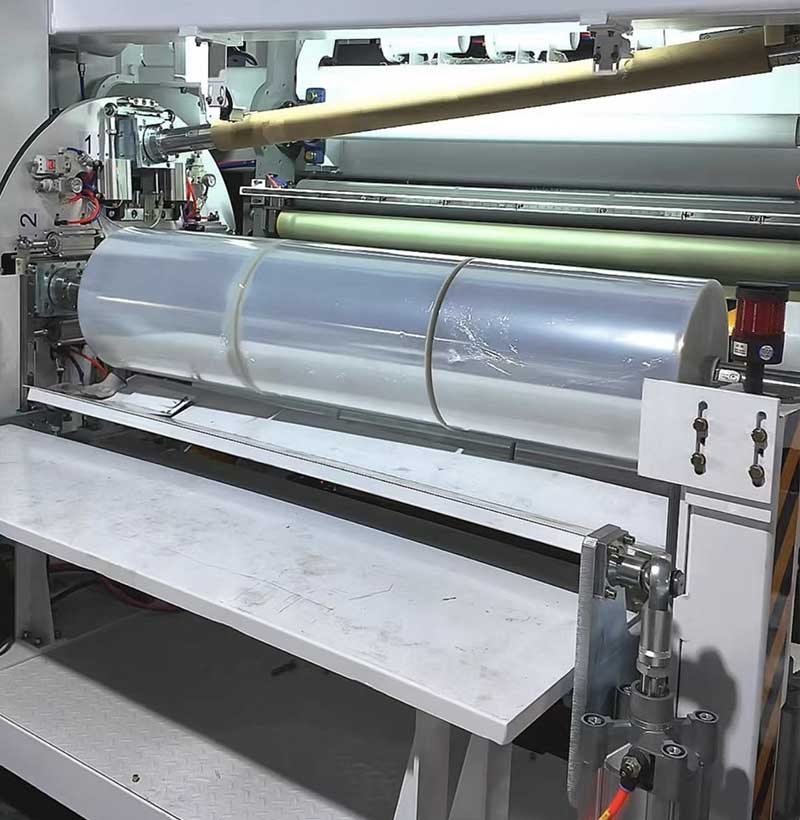
Many buyers default to buying "what we've always used," often 80 gauge film. However, modern resin technology has rendered this traditional benchmark obsolete for many applications. Optimization is about doing more with less plastic.
The thickness of stretch film is measured in gauge or microns. Choosing the right gauge is a balancing act between cost and security.
Standard Benchmark (80 Gauge): This is the traditional "safe" choice for loads up to 2,200 lbs. While reliable, it often results in over-packaging, wasting plastic on loads that don't require such thickness.
Downgauging Strategy: This involves utilizing modern 50-63 gauge high-performance resins. Because these multi-layer films are engineered to be stronger than older resins, they can hold the same weight as traditional 80 gauge films. This reduces plastic waste and cost per pallet.
Heavy Duty (100+ Gauge): For loads exceeding 2,500 lbs or facing extreme transit conditions (like flatbed trucking), thicker films are necessary to ensure the load acts as a single unit.
The magic of machine application lies in pre-stretch. This is where the economics of packaging change drastically.
The Concept: High-performance machine film is designed to stretch 250% to 300%. This means 1 foot of film on the roll becomes 3 to 4 feet of film on the pallet. This "film memory" tries to snap back, creating the tightening force that holds the load together.
The Trap: Buyers often fall for the "cheaper roll" fallacy. If a bargain film costs 20% less but snaps at 150% stretch, you are using significantly more film to wrap the same pallet compared to a premium film that stretches 300%. If the cheap film breaks frequently, your cost per pallet skyrockets due to waste and downtime.
The most critical metric in stretch wrapping is not the number of revolutions or the gauge of the film—it is Containment Force. This is the total squeezing pressure the film exerts on the load.
Operations managers should shift focus from "number of wraps" to verifying containment force. Using a specialized tool (a load cell), you can measure the actual holding pressure at the top, middle, and bottom of the pallet. This data ensures you meet safety standards (typically 10-20 lbs of force depending on load weight) without wasting plastic on excessive revolutions.
When selecting a supplier, viewing the transaction through a Total Cost of Ownership (TCO) lens is vital. The price of the consumable is just the tip of the iceberg.
Your stretch film buying guide strategy should account for three cost drivers:
Material Cost: The invoice price per roll. Surprisingly, this is often the least important metric in the long run.
Throughput Cost: The cost of labor and downtime. If a film breaks three times an hour, requiring an operator to stop the line, re-thread the machine, and restart, the labor costs quickly dwarf any material savings.
Damage Cost: The hidden killer. If a $0.50 savings on film leads to a $500 rejected load due to shifting during transit, the ROI is negative. Investing in a film that guarantees load stability is an insurance policy against freight claims.
How do you validate a supplier's claims? Do not rely on spec sheets alone.
Testing Protocol: Demand a "Cut and Weigh" audit.
Step 1: Wrap a pallet with your current film settings. Cut the film off and weigh it.
Step 2: Optimize the machine settings and wrap the same pallet with the proposed test film. Cut and weigh.
Step 3: Compare the weight of the waste and the stability of the load. This provides the exact cost-per-pallet comparison.
Supply Chain Resilience: Ask if the supplier has domestic inventory or if they rely on volatile import lead times. A cheap film is useless if it is stuck in a container at the port when your production line is running.
Sustainability: Corporate ESG goals are becoming mandatory. Check for the availability of coreless rolls (which eliminate cardboard waste) or films with verified PCR (Post-Consumer Recycled) content.
Buying machine stretch film is an engineering decision, not just a procurement task. The data clearly shows that the "cheapest roll" often creates the most expensive pallet due to poor yield, frequent breakage, and disastrous load failures. By matching film properties to your specific load profile and machine capabilities, you turn a consumable expense into a competitive advantage.
We encourage all operations leaders to stop guessing. Request a load containment audit or a sample roll test today before signing your next bulk contract. Ensure your film isn't just covering your product, but actively protecting your bottom line.
A: The primary differences are core size, weight, and stretch potential. Machine film rolls typically use 3-inch cores and are too heavy for manual lifting. More importantly, machine films are engineered to stretch 200–300% via powered rollers, whereas hand films are designed for lower stretch (30–50%) since human operators cannot generate enough tension to utilize high-performance resins.
A: Choose Cast film for standard, uniform loads where clarity (for barcode scanning) and quiet application are priorities. It is the most common choice for general warehousing. Choose Blown film for "Profile C" loads—heavy, sharp, or irregular items—where superior puncture resistance and cling are required to prevent film failure.
A: Ideally, you should operate at the maximum stretch your machine’s gearing allows, provided the film is rated for it. Standard machines operate at 150–200%. High-performance wrappers can handle 250–300%. Running high-yield film on a machine with low pre-stretch capability wastes money; running standard film on high pre-stretch settings causes breakage.
A: Yes. Modern multi-layer resin technology allows thinner films (e.g., 50–60 gauge) to possess higher containment force and puncture resistance than older, thicker (80 gauge) films. By downgauging, you use less plastic by weight to secure the same load, reducing both material costs and environmental impact.
A: Yes, stretch film is generally Linear Low-Density Polyethylene (LLDPE), categorized as #4 plastic. However, it cannot be mixed with municipal curbside recycling. It requires a dedicated commercial recycling stream (clean, dry, and baled) to be processed effectively.


